
How Mission-Driven Organizations Use Podcasts to Build Trust and Teach Complex Issues
Voxtopica helps mission-driven organizations earn trust, teach complex issues, and grow loyal audiences — without big budgets.
Public policy education has a distribution problem: the most important information rarely travels as far as it needs to.
Social feeds reward speed and outrage. Email struggles to reach new audiences. Events are costly, time-bound, and geographically constrained. Meanwhile, public policy work demands the opposite: attention, nuance, credibility, and repetition.
For organizations trying to change minds, inform communities, or move policy forward, awareness isn’t the goal.
Understanding is.
That’s why podcasting has become one of the most effective communication channels for public policy education.
A podcast can do what most content formats can’t: slow people down long enough to actually learn. It creates trust through voice. It invites complexity instead of flattening it. And, importantly, it meets listeners where they are, on their schedules and in their headphones.
Podcasting works for public policy education because it earns attention in a low-trust media environment. Research from Cumulus Media and Signal Hill Insights found that more than half of weekly podcast listeners say podcast hosts are the type of influencer who matters most to them, nearly three times as many as social media influencers. When explaining complex issues, that credibility gap matters.
And that trust is exactly what public policy education needs. Not a one-day spike, but rather a durable channel where audiences choose to listen, stay, and return.
For public policy organizations considering starting a podcast, it’s important to note that the medium is most effective when it’s treated like communications infrastructure. This means it needs clear objectives, audience insight, disciplined format, and distribution baked in.
That’s what Voxtopica does.
Below are three case studies that show how Voxtopica provided the strategy, direction, and production systems that drove measurable results under very different conditions.
Case Study 1: Growth Through Consistency and Engagement
One Country Project’s Hot Dish — growing a rural audience by 900% with structure and cadence.

The Challenge
The podcast didn’t have a consistent schedule, and its role in the organization’s broader communications wasn’t clearly defined. This meant the audience couldn’t build a habit around the show, and the content strategy couldn’t evolve in response to listener feedback.
The Strategy
Voxtopica reimagined the show with the One Country Project to create a news and politics program designed specifically for rural Americans, anchored by three moves:
1) Make it feel like it belongs to the audience.
The renamed One Country Project’s Hot Dish worked nationally while keeping regional authenticity. (“Hot dish” signals warmth and community in the Upper Midwest and spirited conversation everywhere else.)
2) Build a repeatable episode structure.
Each episode was designed in three segments, so listeners could drop in and still get value:
A monologue highlighting someone making a positive impact in rural communities
A substantive conversation with a guest expert on a key issue (rural health care, the Farm Bill, opioid epidemic, etc.)
A lighter, personal exchange between Heidi and her brother, Joel, who adds radio experience and an authentic rapport to the show
3) Create a predictable release cadence.
Voxtopica knew that for the show to be a success, audiences needed a release structure that they could depend on. Voxtopica implemented a release structure of a new episode every other Wednesday at 11:00 a.m. ET.
No longer “when we can” sentiments. Instead, audiences received new episodes like clockwork.
The Results
Over two and a half years, the show’s audience grew by more than 900%, with most growth driven organically.
Notably, that growth wasn’t powered by a massive marketing budget, but by:
Consistent publishing
Responsive content adjustments using audience data
Targeted guest selection that spoke directly to rural experiences
And critically, the show didn’t just grow, it reached who it was built for. Unlike many general audience podcasts, where approximately one-third of downloads come from the five most populous states, Hot Dish had only 14% of downloads coming from those states, with a meaningful concentration in the most rural states.
Voxtopica continues to work with Hot Dish and recently made further modifications in direct response to listener feedback. Today, the show is released weekly in both audio and video formats. Voxtopica has also directed the team to focus the content on current events. These updates have expanded the Hot Dish audience and contributed to a 10% increase in followers across Apple Podcasts, Spotify, and YouTube.
Takeaway: If your goal is public policy education for a specific community, podcasting lets you design for their habits rather than the average media-buyer persona.
Case Study 2: Limited Series, Unlimited Impact
National Academies — turning a major research report into an evergreen discovery engine.

Some organizations can’t commit to an ongoing show, and they shouldn’t force it. For public policy education, a limited series can be the smarter play because it’s focused, high value, and built to last.
In 2019, the National Academies published The Science of Effective Mentorship in STEMM to help higher education leaders implement evidence-based mentorship practices. Their planned in-person outreach was derailed by the COVID-19 pandemic, so they needed a scalable alternative.
The Strategy
Voxtopica worked with the National Academies to create a podcast that brought the report to life through stories, while keeping the educational utility front and center.
The project became two seasons (ten episodes each) released within one calendar year:
Season One: narrative stories from prominent STEMM leaders (physicians, astronauts, biochemists, physicists) reflecting on mentorship and how it shaped them.
Season Two: interview stories from undergraduate and graduate students, exploring their experiences as mentees and future mentors.
In each episode, the narration connected personal experience back to the report’s recommendations. This enabled the show to work both as compelling audio and as a practical learning resource for audiences.
The Real Unlock: Integration
Instead of treating the podcast like a single launch moment, Voxtopica advised the National Academies to integrate the show into ongoing report outreach by:
Embedding episodes directly on the report’s web pages. This made for easy listening with no extra steps.
Optimizing report pages for search to drive steady organic traffic.
Continued references in ongoing mentorship discussions and activities.
The Results
The audience stayed steady quarter-over-quarter, and new listeners have played the show more after its initial release than during its debut year, demonstrating enduring relevance.
Even without a dedicated marketing budget, the podcast reached far more people than the original on-campus event plan ever could have.
Takeaway: Podcasting isn’t just a broadcast channel. It can also be a way to turn research into an evergreen educational asset that continues to work long after launch day.
Case Study 3: Building a New Generation of Feminists
National Organization for Women — reaching younger, more diverse audiences with modern media.
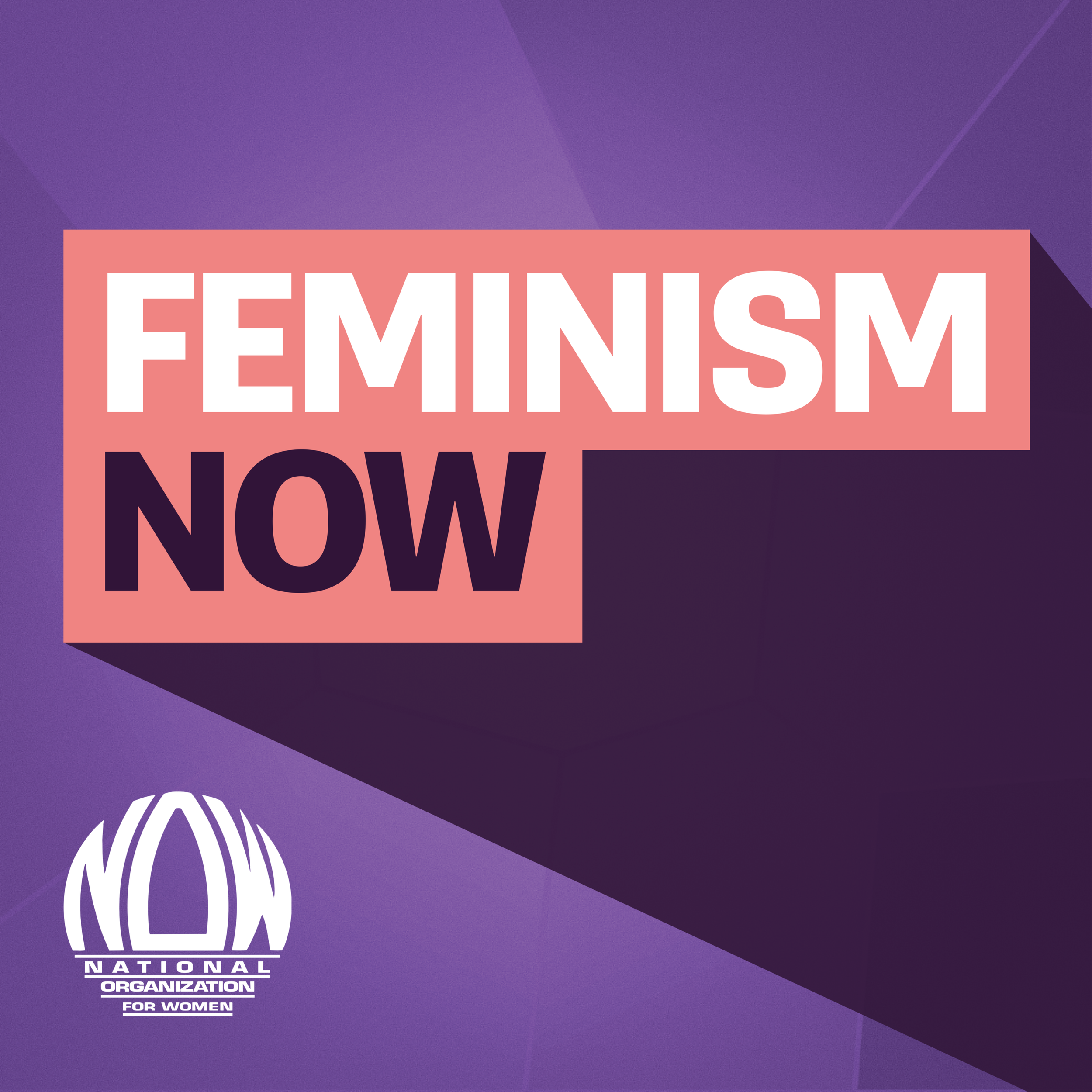
The National Organization for Women wanted to engage a younger, more diverse audience, but their existing channels had limits:
Younger audiences are less likely to join email lists
Social algorithms tend to reinforce engagement from existing supporters rather than attract new ones
They needed a channel that younger listeners actually choose and a format that could support education and identity-building.
The Strategy
Voxtopica developed an interview-style seasonal podcast hosted by the organization’s national president, Christian F. Nunes, whose warmth and natural interviewing style became a key driver of listener trust.
The show focused on topics with high relevance to younger audiences:
reproductive justice
prison reform
racial justice
LGBTQIA+ rights
High-profile guests, ranging from actress and activist Alyssa Milano to political leaders like Speaker Emerita Nancy Pelosi helped to draw attention while the content consistently framed feminism through multiple lenses (voting rights, maternal health, gun violence, entertainment, and more). That framing helped listeners connect feminism to everyday life and see it as inclusive and universal.
The Results
Even launching without a marketing budget, Season 1 established a strong base among existing supporters while drawing in younger listeners.
By Season 4, the audience profile had shifted significantly:
Younger listeners dominated
Many were new to both the National Organization for Women and the podcast
New listeners also engaged deeply with older episodes, demonstrating evergreen value
The show attracted more male listeners, signaling broader resonance of the message
Takeaway: For policy and advocacy organizations, podcasting isn’t just education, it’s movement-building at scale with a longer shelf life than social content and more intimacy than almost any other medium.
What these case studies prove
Big budgets aren’t a must to create meaningful reach, but the right strategy is.
Across all three examples, success came from a few repeatable best practices:
Clear goals: Who are we educating, and what do we want them to understand or do?
Format discipline: Structure that fits audience habits (segments, seasons, limited runs)
Consistency: Predictable publishing and production systems
Audience responsiveness: Use data and feedback to refine topics and guests
Evergreen integration: Make episodes discoverable and embedded in ongoing outreach
Put simply, podcasting works when treated like communications infrastructure, not a side project.
The bottom line
Public policy education needs channels that can carry nuance, credibility, and staying power. Podcasting delivers all three.
It gives mission-driven organizations a way to:
Build trust with target communities
Make complex issues understandable
Extend the lifespan of research and messaging
Reach audiences that traditional channels don’t reliably reach
Create an asset that keeps delivering long after the launch
If your goal is public understanding—not just awareness—build the message in podcast form. Voxtopica will help you define the audience, shape the format, build the production system, and launch a show that delivers measurable education and long-term reach, even with a lean team and limited budget.